

New Cosmo Improvisation update expands creative music-making
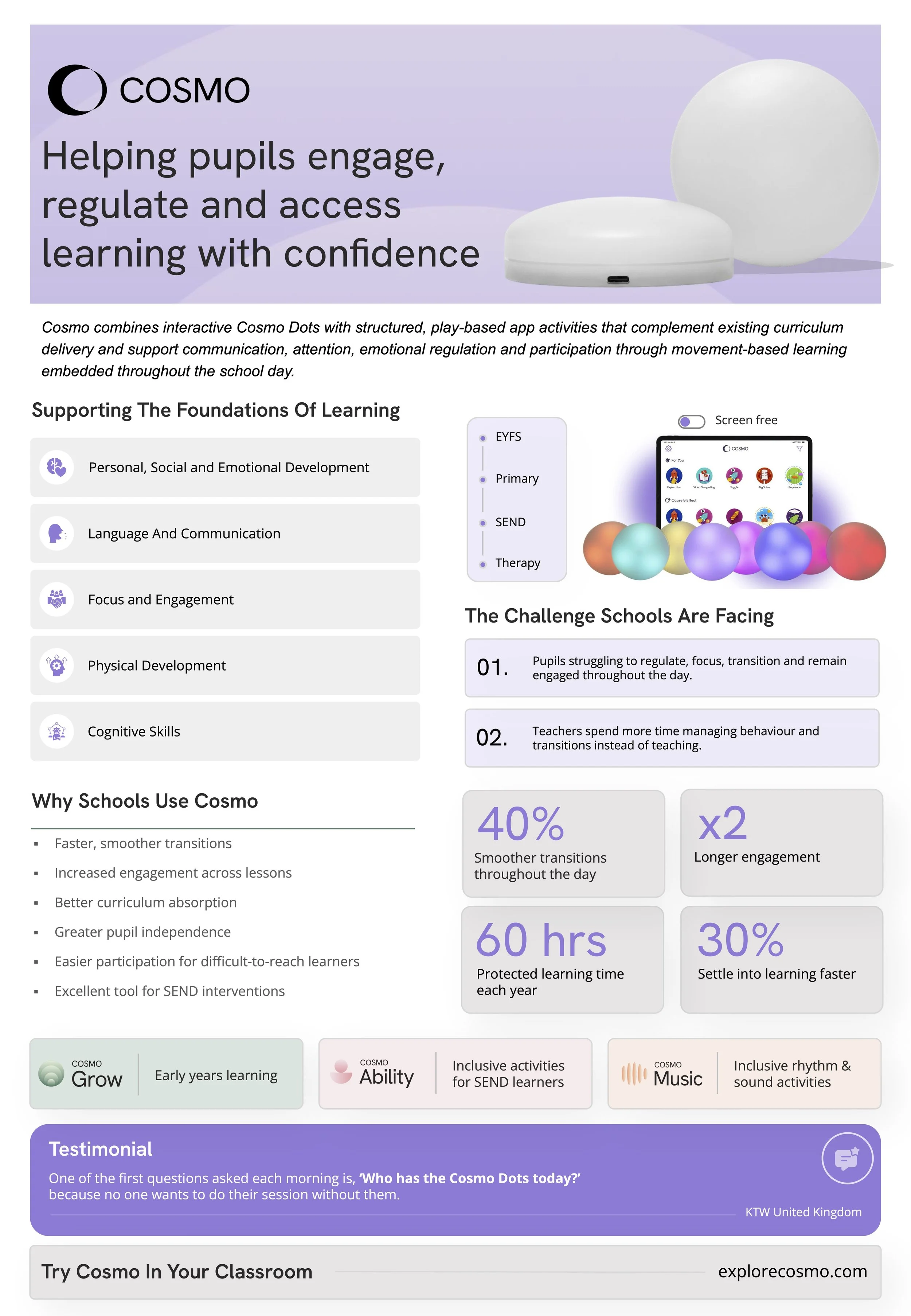
Cosmo statistics show how Cosmo helps students
Cosmo is introducing a major update to its Improvisation activity, with five different modes offering new ways to explore pitch, rhythm, melody and creative music-making.
Following a review of its music activities, TiME Corporate Member Cosmo is releasing an updated version of Cosmo Improvisation, available from early September.
The update introduces five activity modes, ranging from open-ended musical exploration through to listening and response activities and more structured opportunities for playing and improvising.
Five new ways to explore and make music
Free Play provides an open environment for expressive music-making, allowing players to explore different pitches using a wide range of instruments, backing beats, arpeggios and chords.
Whac-A-Mole introduces a playful pitch-recognition challenge. Players respond to the mole appearing by finding and pressing the corresponding Cosmo Dot, encouraging quick responses while exploring higher and lower pitches.
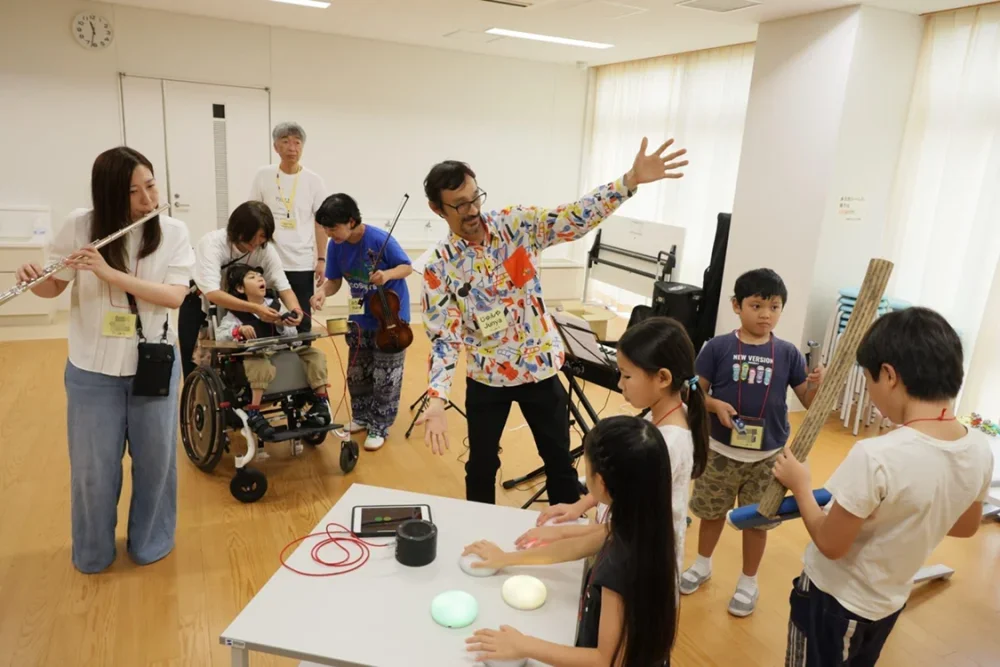
Children and teachers playing Cosmo
Copy Cat focuses on listening, memory and pitch sequencing. Players watch and listen to a sequence before recreating it using the Cosmo Dots in the correct order.
Melody Timing shifts the focus towards rhythm. Players hear a rhythm and copy it back in time with the pulse of a backing beat, providing opportunities to practise and develop rhythmic accuracy.
More control for creative music-making
The new Song Mode offers considerably more control over how the Cosmo Dots can be used musically. Educators and musicians can set the key and scale and assign individual Dots to play pitches, chords or arpeggios.
A selection of popular chord-sequence presets makes it possible to start playing quickly, while users can also create and save their own custom presets for future sessions.
A new Reactive Mode allows pitches to change in response to the previously played chord, creating further possibilities for improvisation and musical interaction.
Coming soon: pupil profiles
Cosmo is also developing individual pupil profiles for the Improvisation activity. These will enable musical responses, melodies and rhythms to be recorded and stored for later playback.
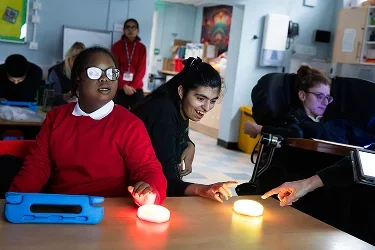
Classroom use of Cosmo
For educators, this could provide a useful way of capturing evidence of musical activity and revisiting a pupil’s responses over time, particularly in settings where conventional forms of recording musical progress may not always be appropriate.
The updated Cosmo Improvisation is due to be available in early September.