

Jonah Michael: My Experience of the ADHD Pianist’s Guide
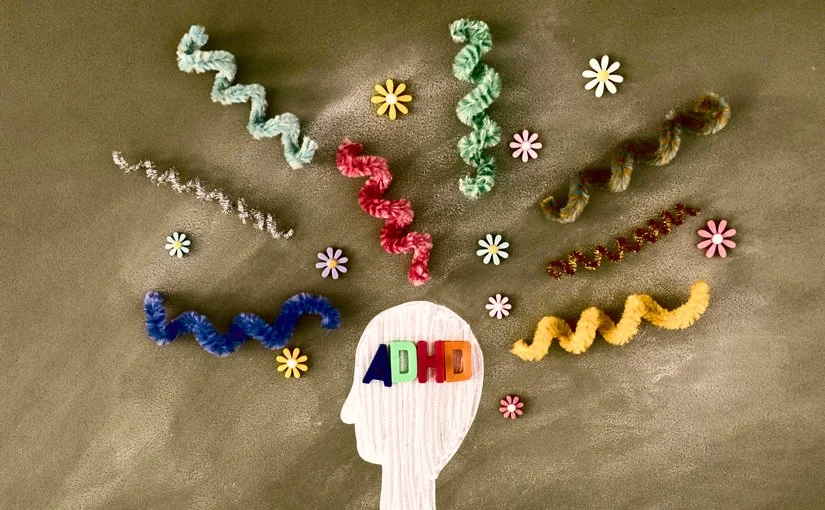
The shape of a head with colourful letters spelling “ADHD” inside it. Bright pipe cleaners and small flower shapes radiate outward, symbolising thoughts, energy, and creativity
Inspired by ADHD: A Pianist’s Guide by Andrew and Louise Eales, Leicester-based artist Jonah Michael reflects on how the guide offers practical insights to help neurodiverse learners thrive in music.
Jonah Michael: My experience of the ADHD Pianists Guide.
I took piano, music theory and guitar lessons whilst attending secondary school, all with modest degrees of success, despite being very creative and having a clear desire to create and perform music. I was unable to focus in lessons and often forgot to practice week to week. I felt like I was falling short of my potential, and my music teachers clearly felt the same way, almost as if my technical capability didn't match up to my understanding of music on an emotional level. I was convinced I must be lazy but couldn't seem to find a way to change it, and consequently stepped back from music at 18 for a few years.
At 24 years old, I started my ADHD journey and realised a lot of the quirks I'd grown up with weren't just as a result of being eccentric, but very normal traits for someone with Attention Deficit Disorder. It made me re-evaluate why those music lessons didn't go well. And, now a part-time musician, I felt as though I'd missed some foundational training, so I started taking music lessons again, this time as a vocalist.
For some reason, this time it worked; I was motivated, I practised every day and progressed very quickly. Until reading Andrew & Louise S. Eales' "ADHD: A Pianist's Guide", I wasn't able to articulate and truly understand how my vocal coach's teaching method worked so well for me.

Portrait of Jonah Michael
Here are some really interesting things I feel like anyone who is teaching or receiving music lessons can take away from this guide, pianist or not.
1. One of the common attributes of ADHD is poor co-ordination. This is definitely something I experienced, and my teachers found this frustrating. This doesn't mean people who struggle with poor co-ordination can't learn instruments, but that patience is required from both the teacher and the student themselves because...
2. ADHD often comes coupled with Rejection Sensitivity Dysphoria. Many people who have or know someone with ADHD already know this, but in the context of a teacher running a music lesson, it's important to approach the student with warmth, gently setting boundaries to stay on track, but taking your lead from the student and finding ways to encourage without criticising and celebrating the wins, however small they might seem.
3. Different types of medication last for different lengths of time (some only lasting for 4 hours), so if you're teaching someone who's medicated for their ADHD, it's worth having a conversation with them about whether there is a best time to have the lesson in order for them to benefit the most from their medication.
4. Actively working with the student to schedule practice into their week can be really important. This was a game-changer for me, as I do the dishes every day, and whenever I do the dishes, I do my vocal exercises.
5. Finally, practical examinations can be encouraged if the student is interested, but shouldn't be forced. Andrew mentions that people with ADHD often think outside the box, and this may manifest in a lack of interest in pursuing traditional grades. From personal experience, I've never taken a singing exam, but I am a performing musician and I wanted to focus on building a live set with my coach as opposed to following a syllabus.
I would really encourage all music teachers, be it peripatetic, classroom, or in the community, to read this brilliant report and share it with others. It may be the one thing that helps to link up the many dots to a life in music.
You can read the guide at https://pianodao.com/2024/08/18/adhd-a-pianists-guide/