

We’re delighted to share the launch of the Guide to Buying Adaptive Musical Instruments

Front cover of the Guide to buying Adaptive Musical Instruments - published by the Inclusive Music Consortium. The CMPSR (Composer) instrument is shown
Inclusive Music Making Made Easier with Launch of New Guide
Disabled musicians will find it easier than ever to find and fund the right adaptive musical instruments or equipment for their needs - thanks to a new downloadable resource.
The Guide to Buying Adaptive Musical Instruments is the only one of its kind in the UK. It brings together the latest innovations in adaptive and digital instruments, with practical options to suit a wide range of needs - from one-handed recorders to conductors’ batons for the visually impaired.
Last published in 2020, the guide has been commissioned by social enterprise Creative United and compiled and published by the Inclusive Music Consortium (IMC) – a group of specialist organisations committed to making music education and the wider music industry more accessible and inclusive for disabled people.
The guide is hosted on a newly launched website for the Take it away scheme – a Creative United initiative that breaks down financial barriers to music-making. Funded by Arts Council England and the Arts Council of Northern Ireland, the scheme has already helped many thousands of UK customers to finance the purchase of a new musical instrument with the benefit of an interest-free loan.
Mary-Alice Stack, Chief Executive at Creative United said: “As a social enterprise, we’re committed to supporting the creative livelihoods of musicians of all ages and abilities. This guide, alongside our Take it away website, will help raise awareness and enable access to the wide range of product developments and innovations which are helping break down barriers to participation in music for disabled people.”
Clarence Adoo, who plays with the Paraorchestra and RNS Moves said: "My hope is that many people are able to access an accessible instrument. If it's accessible or tweaked in the right way, it can give you a sense of freedom and better technique.”
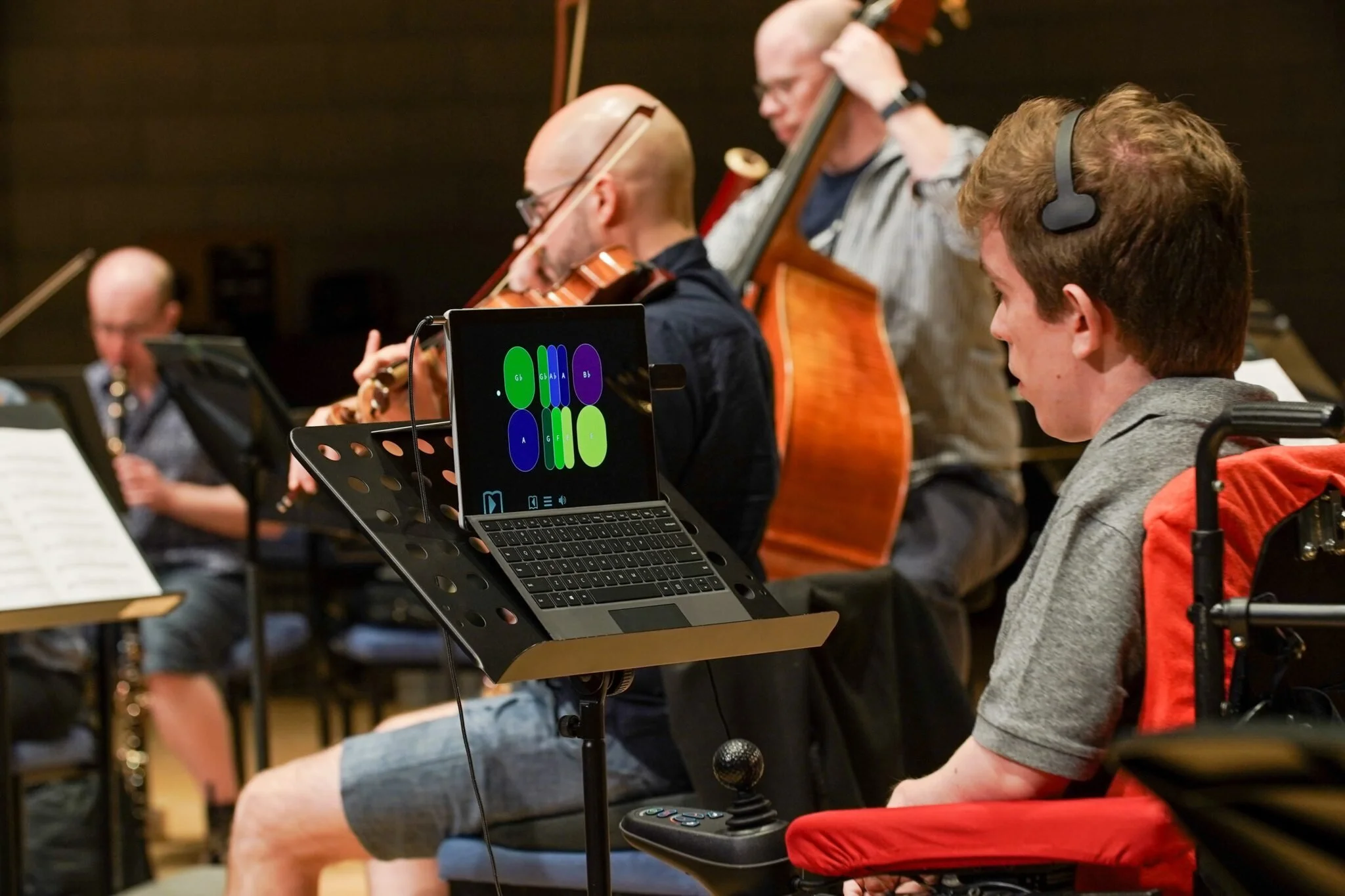
Image Credit: National Open Youth Orchestra - ALESSANDRO VAZZANA plays the Clarion with NOYO
Anne Edward, whose disabled son is a young musician said: "About 7 years ago, the Clarion opened the world of music to my son by removing the physical barriers to him playing music and allowing his talent to shine through. A guide like this would have allowed us to explore options as his physical functionality decreased and would certainly have made his journey to becoming a musician less frustrating and more enjoyable for us all. Today he plays with a mainstream community orchestra, performs with regional ensembles and is part of a new Clarion trio."
Tom Kiehl, Chief Executive of UK Music said “Music is the ultimate form of communication, with adaptive instruments providing a vital means for people to express their creativity. The thought, skill and ingenuity that goes into adaptive musical instruments is something that I learnt much more about earlier this year when I was privileged to attend the ABLE Assembly at the Berklee School of Music. This updated guide is a very important resource and assist understanding further.”
Kate Rounding, Executive Director of TiME said “Technology in Music Education (TiME) is delighted to support the updated Guide to Buying Adaptive Musical Instruments. It plays an important role in raising awareness of the tools and technologies that can make music more accessible, enabling more people to participate in music-making. TiME is proud to champion this guide as an essential reference for educators and practitioners committed to inclusion. By working together across education, industry and community settings, we can continue to build equitable access to music for everyone.”
A collective resource for inclusive music-making
The Guide to Buying Adaptive Musical Instruments has been developed as a shared resource, drawing on the expertise, insight and lived experience of the IMC’s members.
Inclusive Music Consortium logo alongside logos for member organisations
The Guide brings together information on:
Adapted acoustic instruments
Versatile electronic instruments
Prototypes and custom designs
Links to inclusive retailers, organisations and funding support
The resource is not intended to be exhaustive. Instead, it aims to show what is possible, encourage creativity and experimentation, and signpost disabled musicians and their families to support and advice.
Accessing the Guide
The Guide to Buying Adaptive Musical Instruments is free to download from 4 November 2025 at: https://takeitaway.org.uk/accessible-instruments/
The website features an interactive map of over 100 music shops offering a range of instruments, equipment, technology and tuition, available to buy with an interest-free loan, including two retailers specialising in adaptive instruments.
Supporting statements from across the music sector:
This Guide to Buying Adaptive Musical Instruments is an essential and very welcome addition to the resources available to young people, their families and carers, teachers and others as they explore the opportunities available to them in music. A practical guide, it’s full of useful advice and guidance, brought to life through the links to video demonstrations of the instruments and tools described. At Arts Council England we’re committed to improving access for disabled people across the creative and cultural sector: this new resource is a vital asset in this work.
Dr Claire Mera-Nelson (Director, Music, Arts Council England) and Hannah Fouracre (Director, Music Education, Arts Council England)
Music Mark is delighted to see this new, updated Guide to Buying Adaptive Instruments. Everyone should have access to the joy of playing music and there are so many new products which can make assess to instruments possible for those with additional needs. This comprehensive guide demonstrates the diversity of options available and crucially provides information about where they can be purchased. We look forward to signposting this guide to music educators to help them provide advice and support.
Bridget Whyte – CEO, Music Mark
There are so many young people who are fizzing with musical creativity but don’t know what instruments are available to them. The IMC Guide to Buying Adaptive Musical Instruments is going to be an important resource for these young people and we can’t wait to see them perform at Music for Youth festivals.
Phil Castang – CEO, Music for Youth
This is a great resource to outline the breadth of options available for people with a wide range of impairments, from one-handed instruments such as the clarinet to instruments that can be controlled by a huge variety of input mechanisms including eye gaze trackers and physical gestures. This will help individuals find the right solution for themselves and for teachers and retailers to know what is available for learners at all stages.
Rachel Wolffsohn - General Manager, The OHMI Trust
The Music Industries Association is proud to support this important Guide, which showcases the innovation and collaboration driving greater accessibility in music. By highlighting adapted and adaptive instruments, it helps to break down barriers and inspires our sector to keep developing solutions that open the joy of music-making to more people. As the trade body for the UK’s musical instrument industry, we welcome this resource as a powerful tool for musicians, educators and retailers alike, and as an inspiration to build a more inclusive future for music.
Alice Monk – General Manager, Music Industries Association