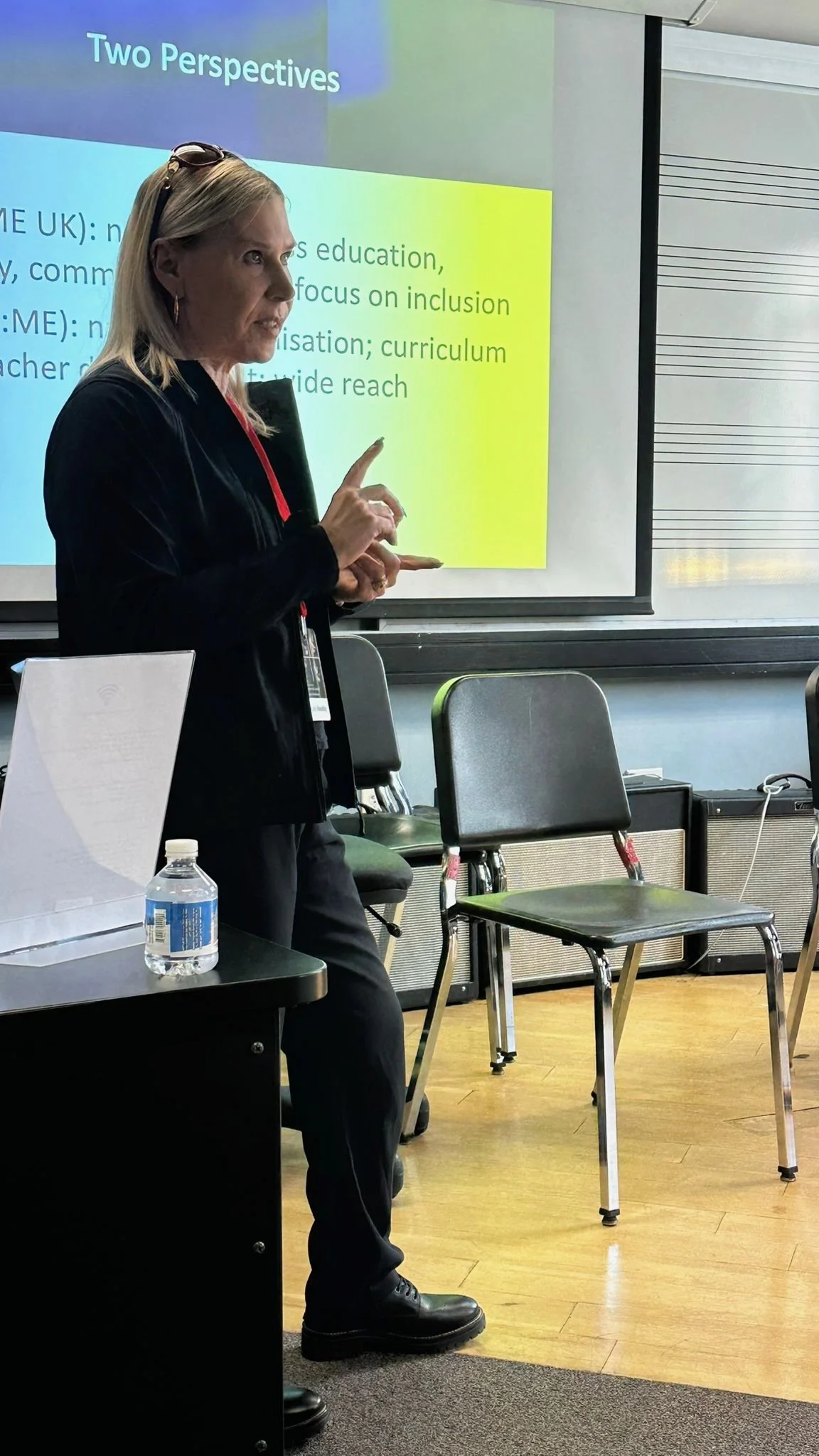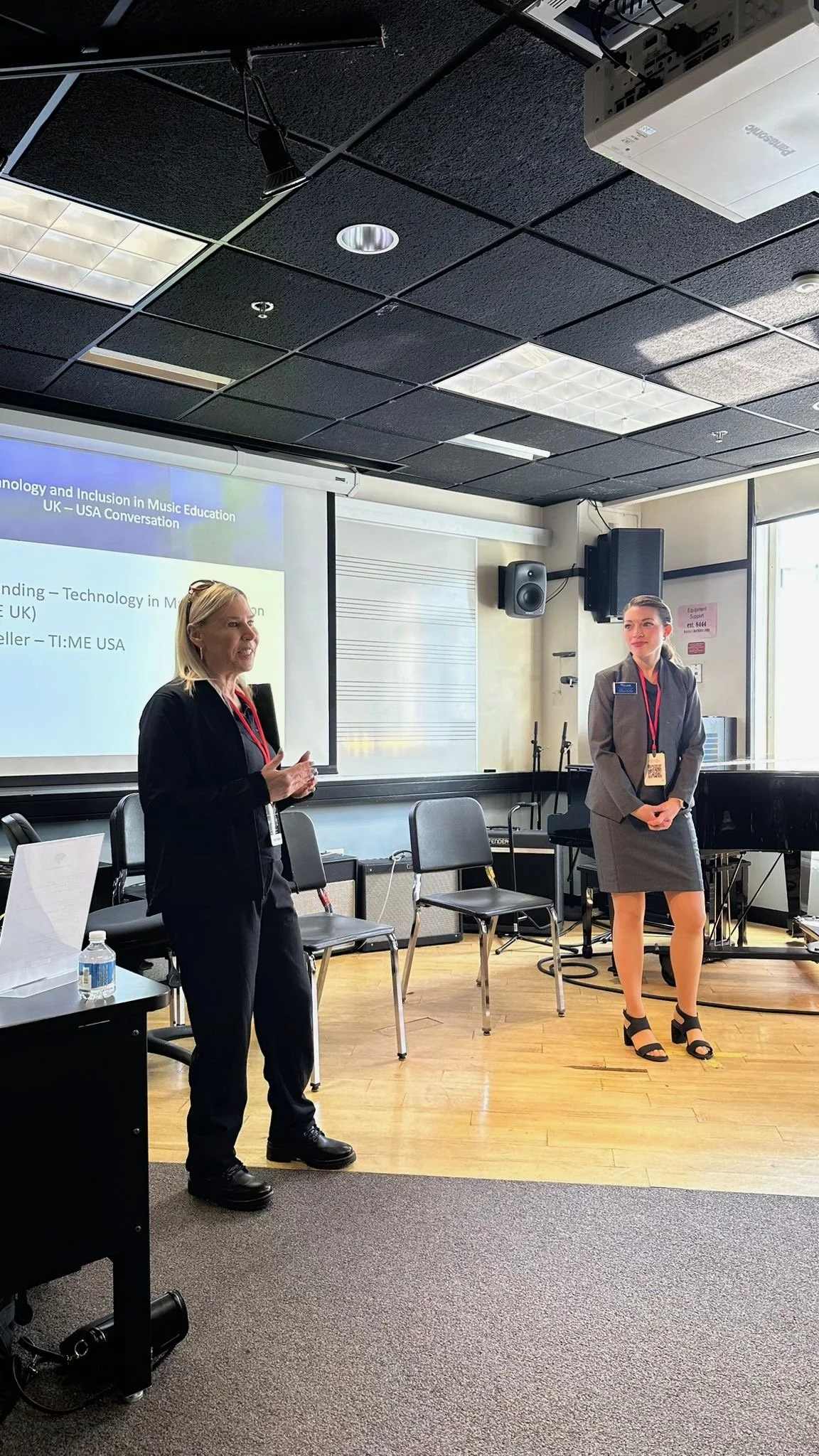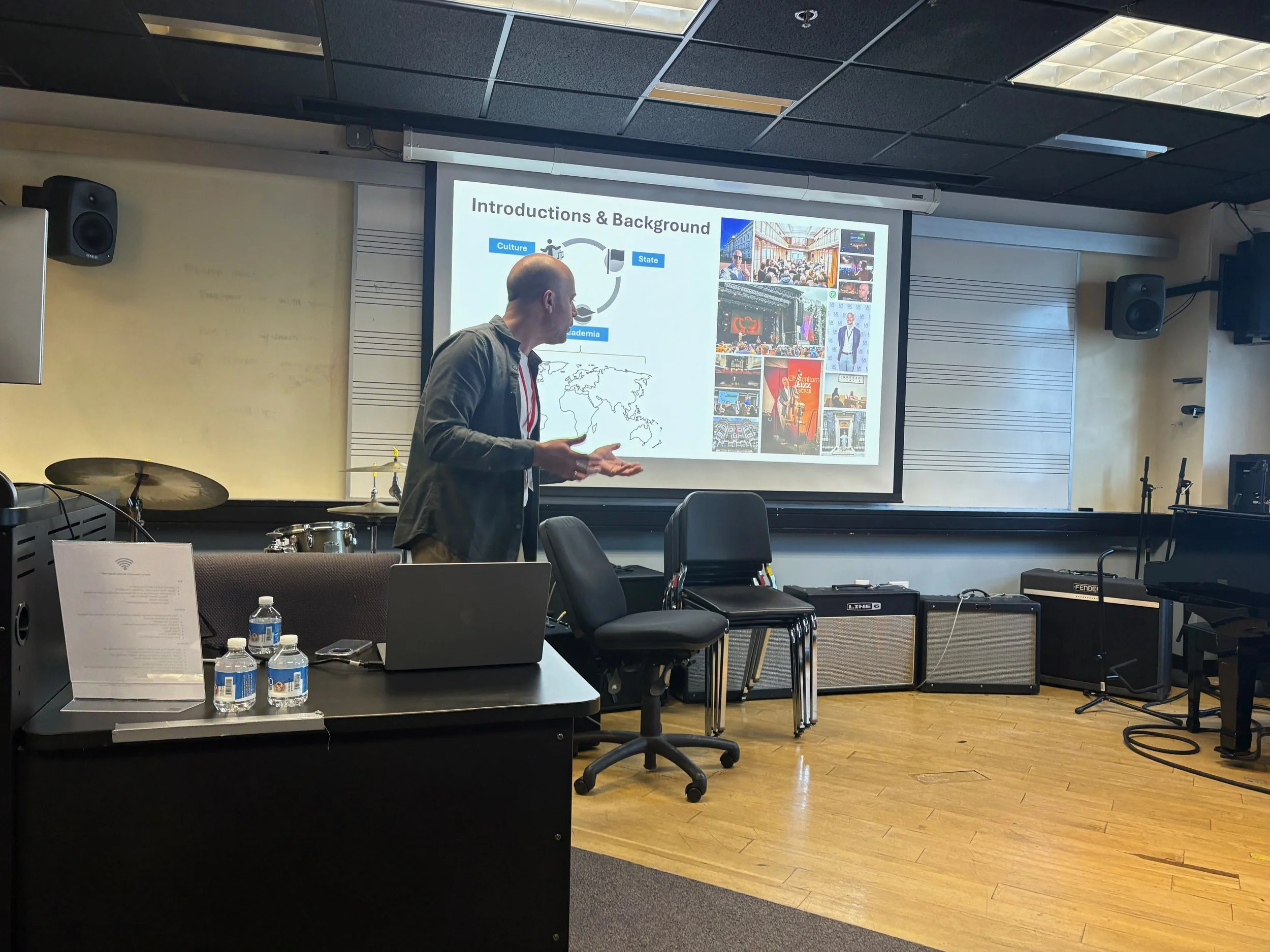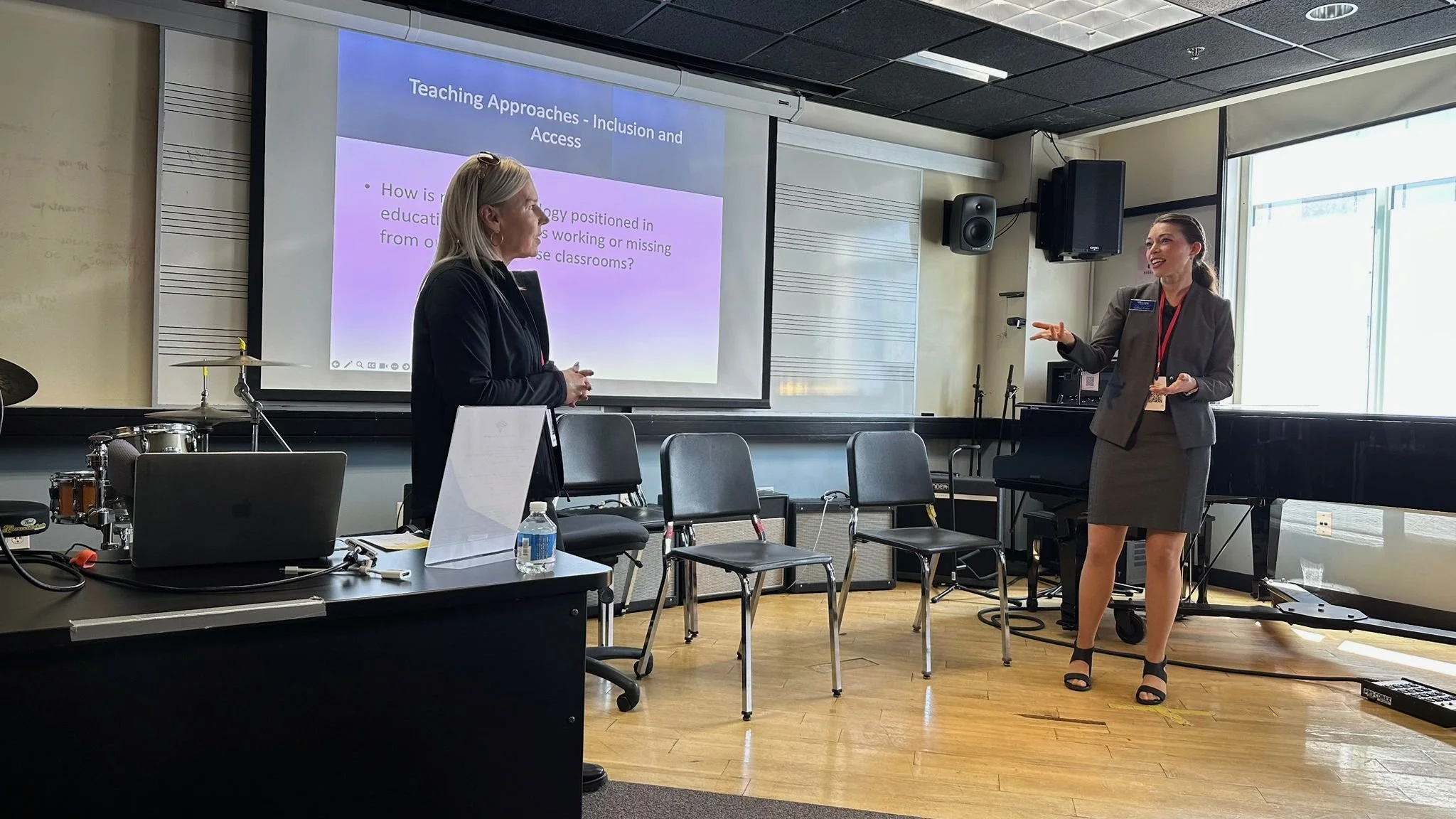
Kate Rounding (TiME UK) and Gillian Keller (Ti:ME USA) co-present at Berklee College of Music, Boston, USA
Kate Rounding, Executive Director, TiME UK feeds back from the Able Assembly at Berklee College of Music in Boston USA.
From 10th to 12th April 2026, I had the privilege of representing TiME at Able Assembly, held at the renowned Berklee College of Music. Organised through the Berklee Institute for Accessible Arts Education, the conference brought together educators, artists, researchers and advocates to explore how music and the arts can become more inclusive, creative and accessible for all learners.
Berklee was an inspiring setting. Across three packed days, Able Assembly combined keynote talks, workshops, practical demonstrations and conversations that encouraged delegates to share ideas openly and learn from one another. There was a strong sense of generosity throughout the event, with people discussing progress and challenges in thoughtful and practical ways.
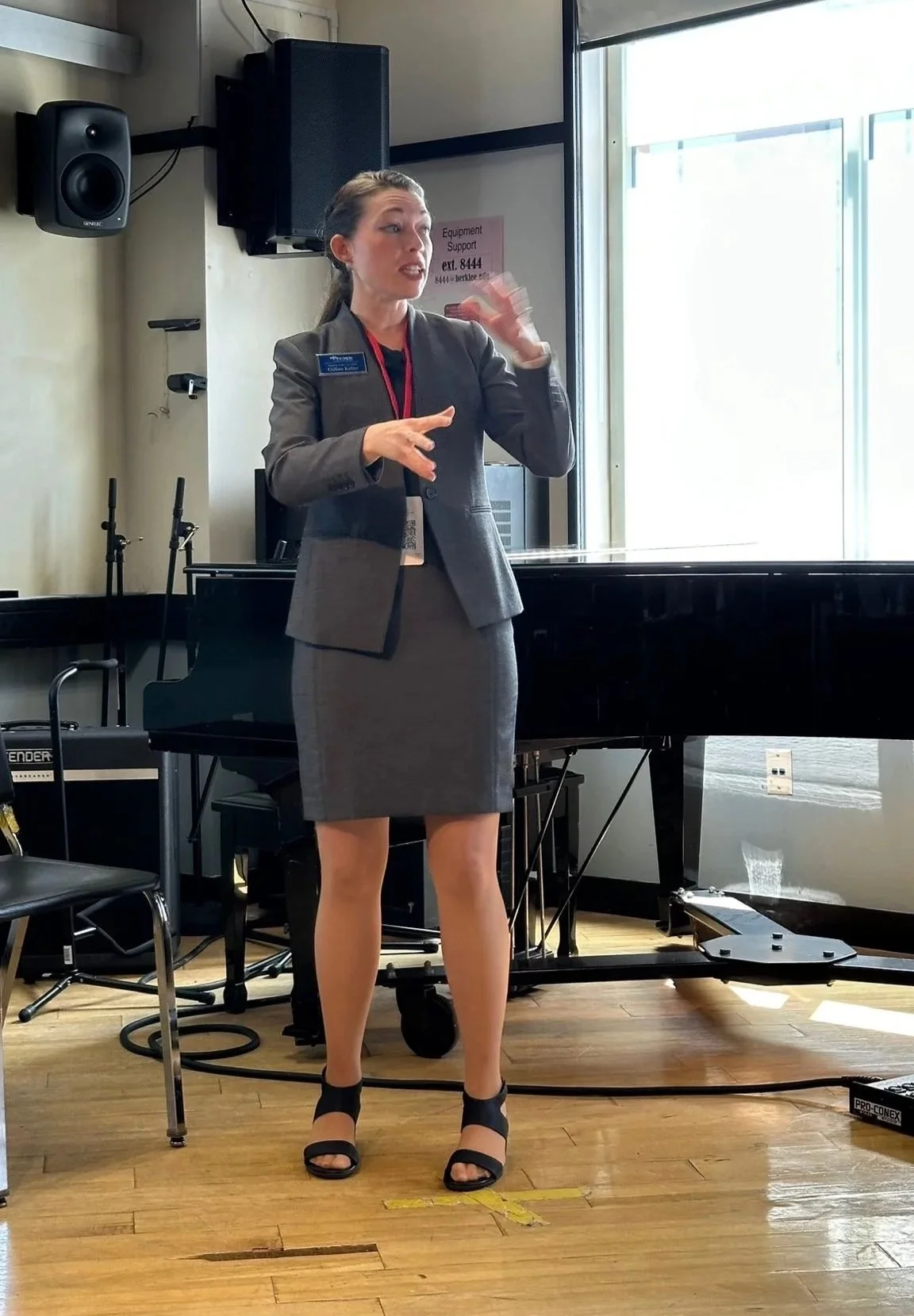
Gillian Keller of Ti:ME USA presenting
A particular highlight was strengthening the growing relationship between TiME UK and TI:ME USA, with valuable opportunities to exchange ideas, compare approaches and identify future opportunities for collaboration between our organisations.
Alongside learning from others, I was pleased to contribute three sessions on behalf of TiME. The first, co-presented with Gillian Keller, explored what the UK and USA can learn from one another in technology-enabled inclusive music education. Gillian is a Board member of Ti:ME USA and recipient of the organisation’s 2024 Teacher of the Year award. The session generated lively discussion around funding models, teacher training and classroom practice.
Personally, one of the most interesting learning points was the emphasis in the United States on ensemble learning. Band, choir and orchestra models remain central in many schools, creating rich opportunities for teamwork, identity and musical growth. It also prompted useful discussion around differentiation, access and the role technology can play in helping more students participate confidently.
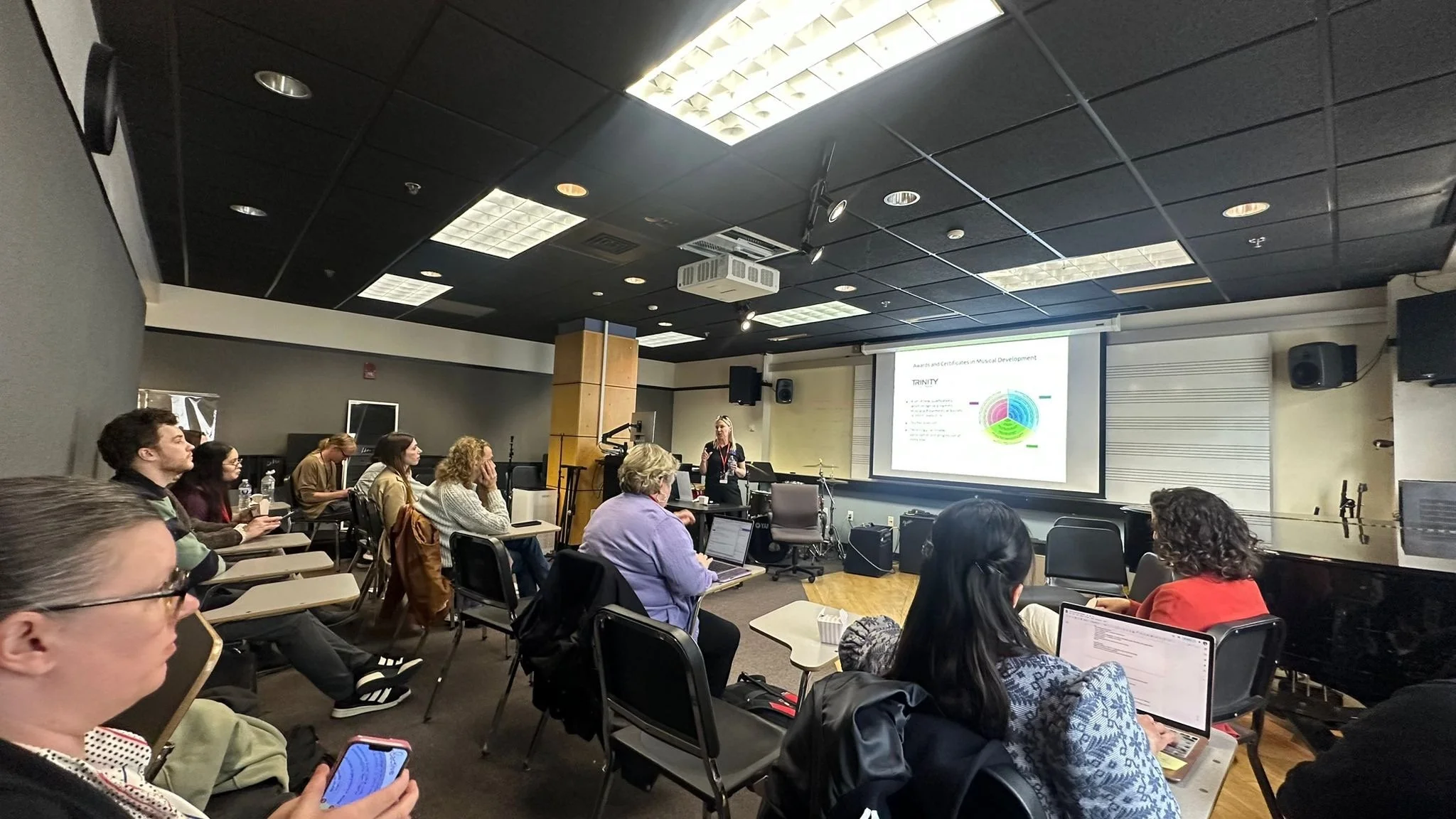
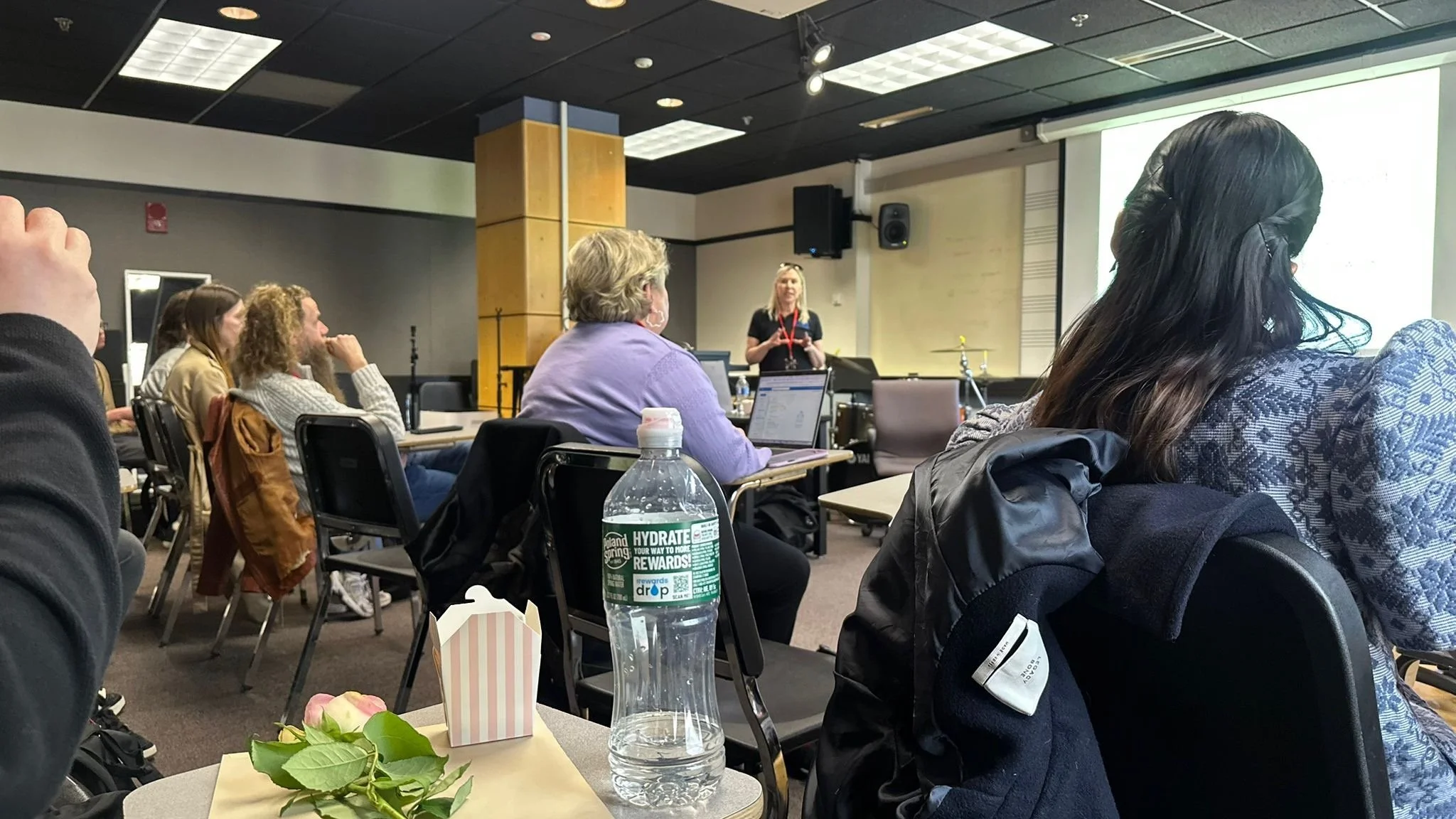
Kate Rounding presents the Mugo and Sounds of Intent at Berklee College of Music
Another area I found particularly interesting was the different ways the UK and the USA support progression and accreditation in music technology. The United States does not offer a single national qualification for learners under 18. Instead, students may access state vocational pathways, industry certifications and university pre-college programmes. Credentials linked to software such as Pro Tools, Ableton Live and Logic Pro are common routes, alongside Career and Technical Education pathways in production, broadcasting and live sound.
Across the sessions I presented, there was strong interest in accessible accreditation frameworks such as Sounds of Intent, as well as qualification routes including Trinity’s Awards and Certificates in Musical Development (ACMD). In particular, delegates were interested in how progression can be recognised through achievement on any instrument, whether digital or acoustic.
I was also interested to hear how strongly online learning platforms are embedded within professional development. In a country of such scale, digital training, webinars and remote communities clearly play an important role. Organisations such as Ti:ME continue to support teachers through conferences, certification pathways and practicial CPD.
My second session focused on adaptive music technology and the many ways these tools can widen participation. Sharing examples from UK practice sparked strong interest, particularly around affordable, portable and readily available solutions for specialist settings. One question kept arising across the conference: “What can I do tomorrow?” In many cases, that also meant, “What is available now, and what can I realistically buy or access straight away?”
In the third session, I shared updates on the Mugo, an innovative instrument built in partnership by The Amber Trust and TiME, and designed with accessibility at its core. Thanks to Gawain Hewitt for providing an excellent Mugo demonstration video. There was strong interest in the Mugo and its potential to support creativity, independence and musical expression.
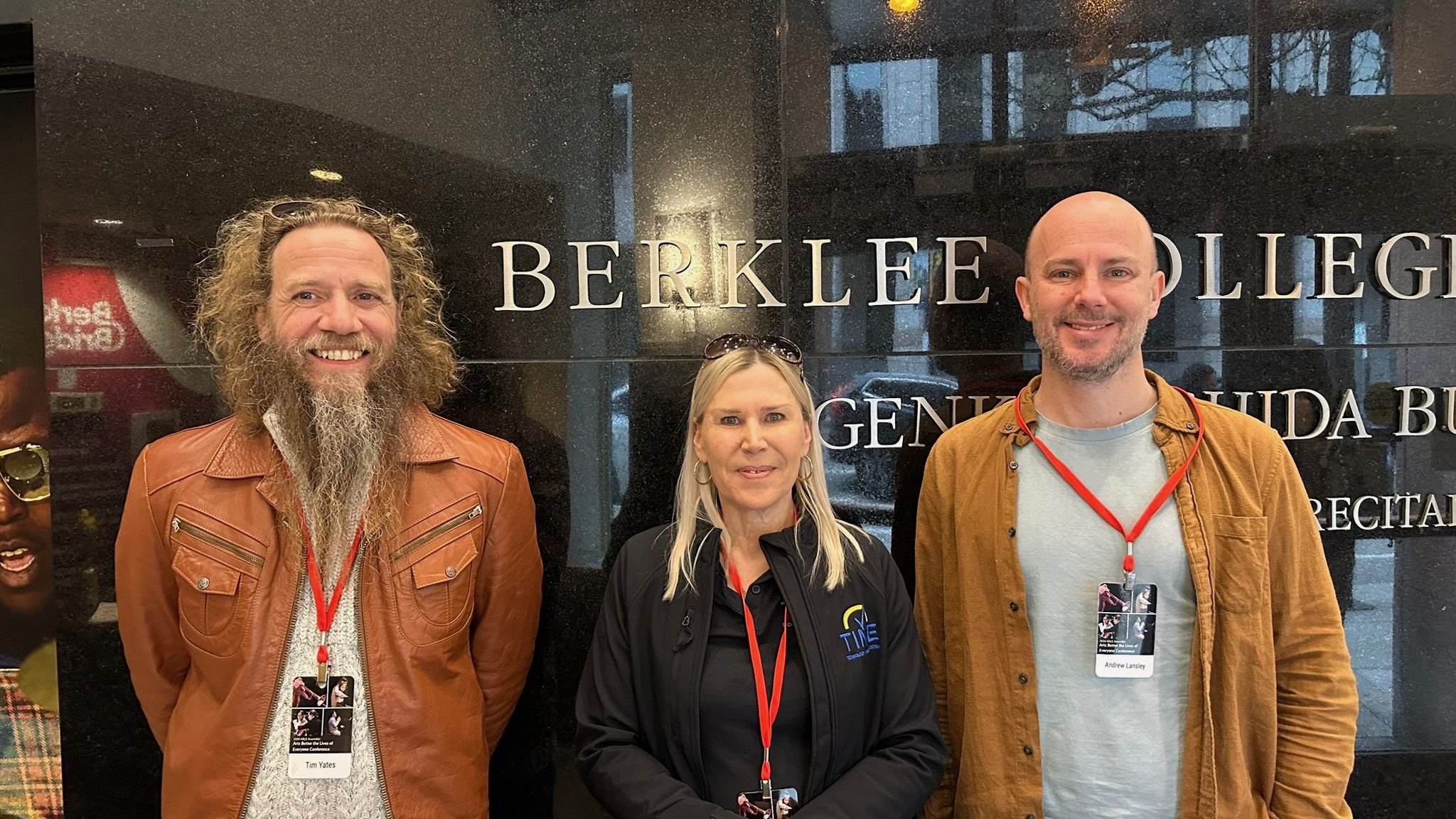
Photo of Tim Yates (left), Kate Rounding (centre) Andrew Lansley (right) stood in front of the Berklee College of Music entrance
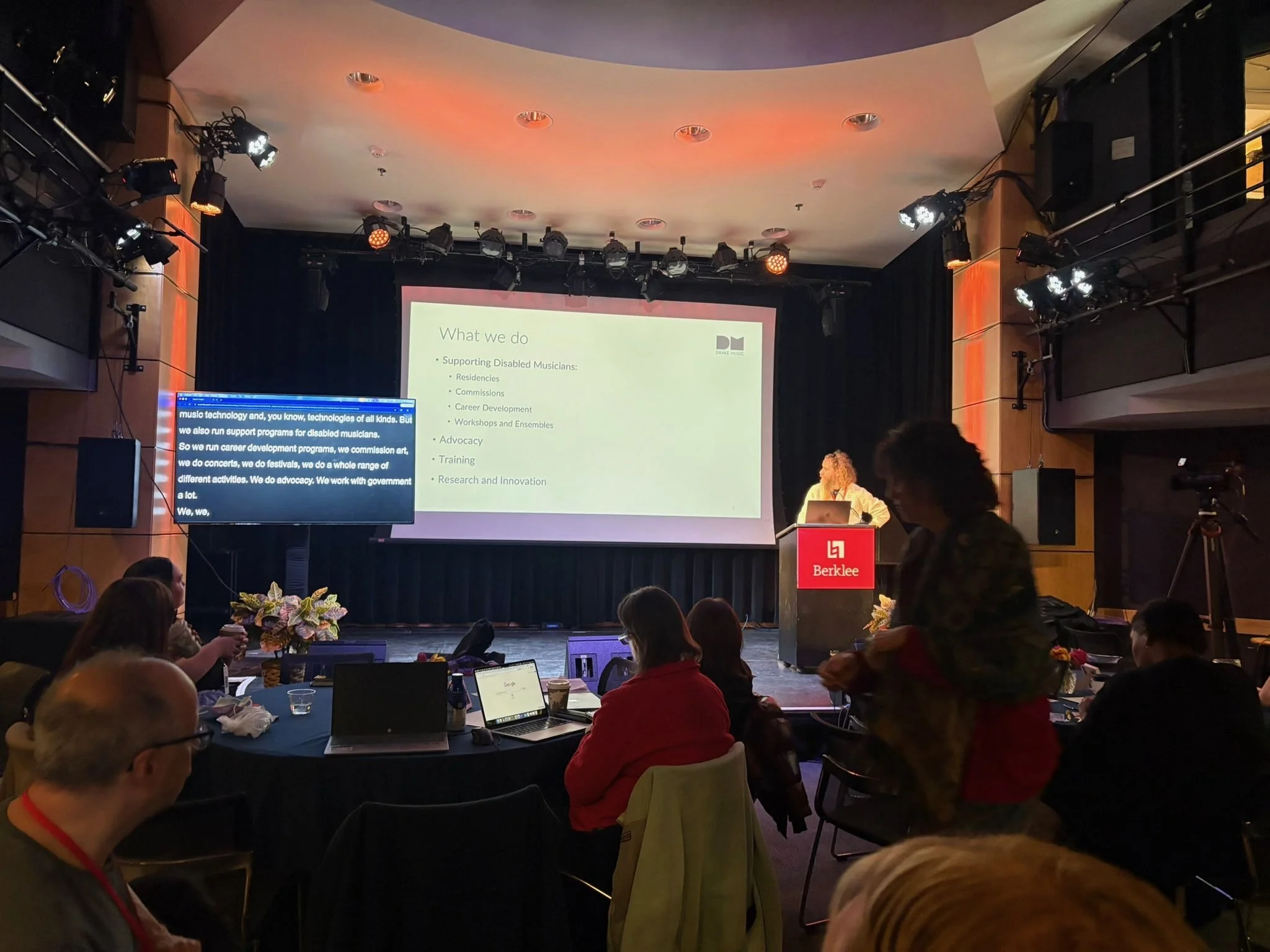
It was also great to see UK colleagues contributing strongly to the programme. Andrew Lansley hosted a session on the State of Access, sharing highlights from international partnerships and demonstrating how collaboration across borders can strengthen inclusive live music practice. Tim Yates from Drake Music led a maker session that was genuinely great fun and also highly practical. It showed how easy it can be to build or adapt instruments around different playing styles, physical approaches and creative interests.
It was equally valuable to connect with wider sector colleagues attending the event, including Athan Billias from the MIDI Association, who brought insight from the Music Accessibility Standard SIG, an important area of development as accessibility becomes more embedded in music technology design and standards.
The keynote programme also offered memorable moments. Topics included internalised ableism in music education, the historical relationship between race and disability in arts education, and the importance of imagining fairer futures through teaching and creativity. I found these sessions thoughtful, challenging and highly relevant for anyone working in education today.
Some of the most valuable learning came between sessions, in conversations with teachers, artists and leaders working in very different contexts. Representing TiME at Able Assembly was a valuable opportunity to share UK practice, build international relationships, and bring back fresh ideas that can support our members, partners, and the wider sector.